During her first few weeks at WashU, sophomore Meishu Han mentioned to her resident advisor that she loved being outdoors. It was a small conversation, one she barely remembered. Weeks later, that RA stopped her in the residence hall with a suggestion for a nearby hiking trail.
The interaction lasted only a moment, but it left a lasting impression.
“It made me feel supported and made me realize that they were really paying attention to who I was and what I loved doing,” Han said.
For Han, that simple gesture captures the essence of well-being at WashU. It’s not defined by a single office, program or service. It’s found in the relationships students build, the communities that surround them and the everyday moments that make them feel seen, supported and connected.
As a sophomore studying biology and philosophy-neuroscience-psychology, Han has become one of the student voices helping shape WashU’s approach to well-being through the Well-being Collective. Her perspective comes at a time when colleges nationwide are grappling with rising concerns about student health, belonging and mental well-being.
Nationally, student well-being remains a growing concern. According to the 2024-2025 Healthy Minds Study, 37% of college students reported moderate to severe depressive symptoms, 32% reported moderate to severe anxiety, and more than half reported experiencing loneliness. Additionally, 11% reported suicidal ideation in the previous year.
Those numbers underscore why WashU is taking a broader, more coordinated approach to well-being, one that moves beyond individual programs and seeks to embed support throughout the student experience.
Han sees that work firsthand through the Well-being Collective, where students, faculty and staff are working to better understand how well-being is supported across campus, and she said well-being can’t be solved by any single office, program or intervention.
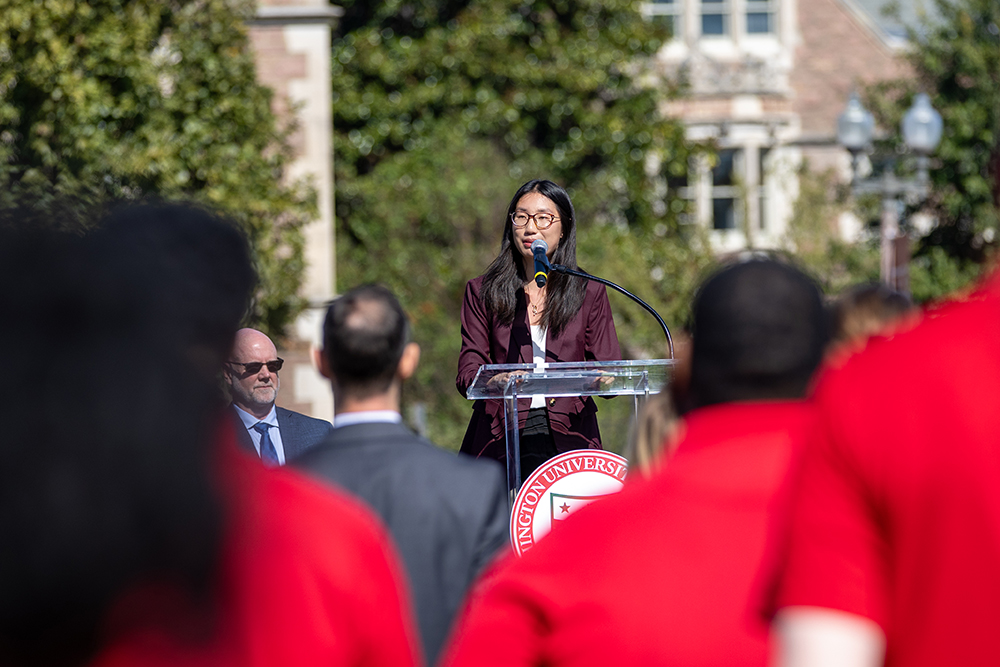
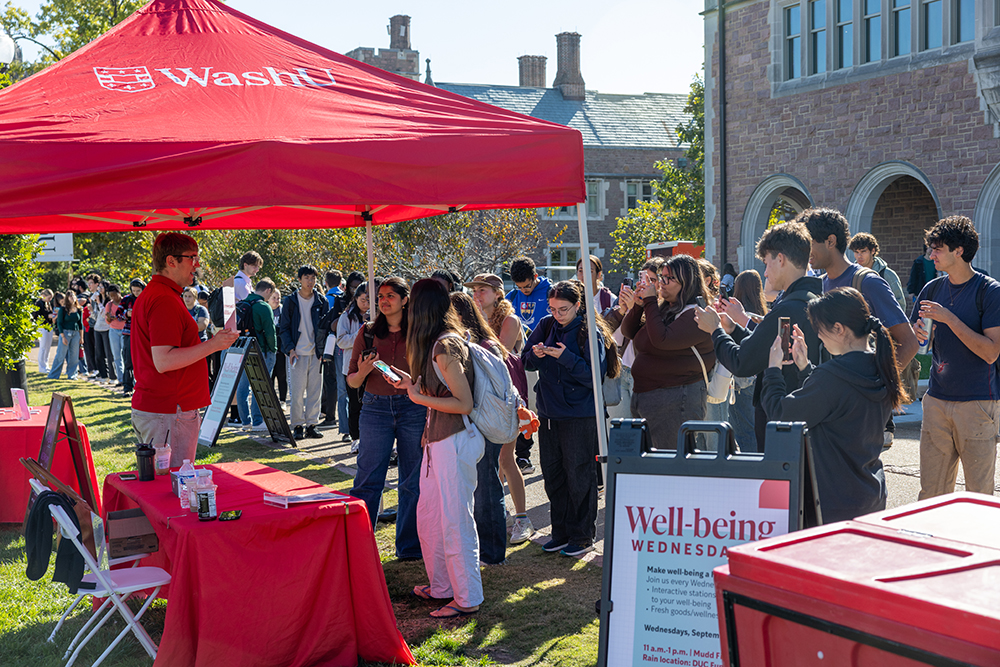
“To me, well-being is about finding balance and joy,” she said. “It’s about making space for your academics, but also having a good support system, doing things that you love, spending time outside, staying connected to your family and people that you care about.”
That belief aligns with a broader shift underway at WashU.
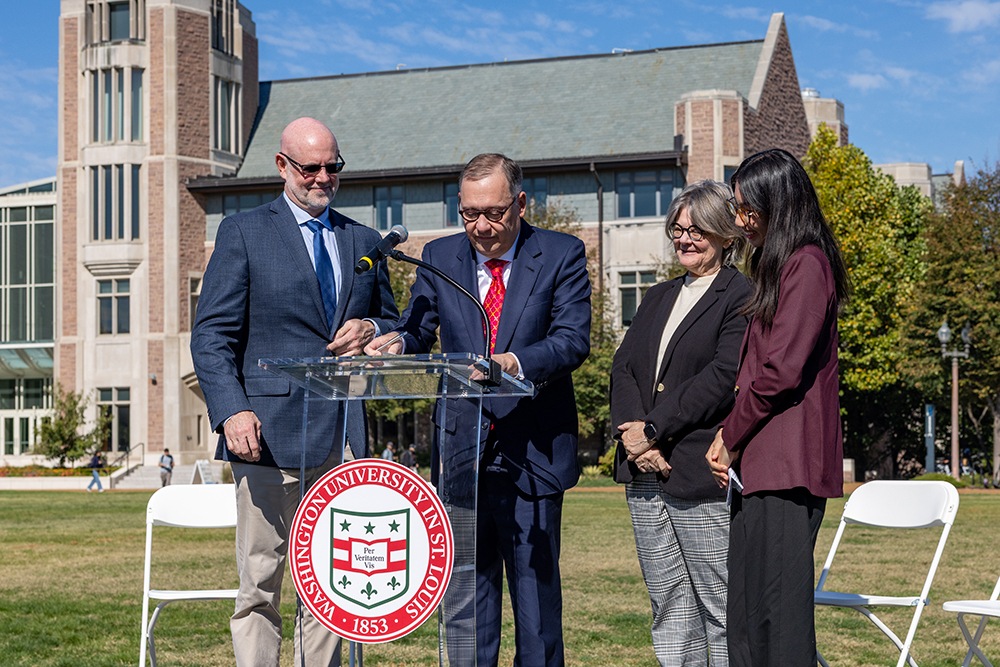
This fall, the university became a signatory of the Okanagan Charter, an international framework that calls on colleges and universities to embed health and well-being into every aspect of campus life. While wellness efforts have traditionally focused on individual services, the charter encourages institutions to create conditions that support well-being across the entire campus environment.
“When students feel a sense of belonging, purpose and support, they are better equipped to learn, lead and reach their full potential,” said Vice Chancellor for Student Success Anna Gonzalez. “Our commitment to well-being is ultimately a commitment to every student’s ability to thrive, both during their time at WashU and long after graduation.”
According to Arie Baker, director of health promotion, that’s precisely the vision WashU is pursuing.
Historically, university wellness programs operate in isolated areas. Signing the charter signals a pivot toward systemic, settings-based change, treating health as an ecosystem rather than just an individual responsibility.
– Director of Health Promotion Arie Baker
“Historically, university wellness programs operate in isolated areas,” Baker said. “Signing the charter signals a pivot toward systemic, settings-based change, treating health as an ecosystem rather than just an individual responsibility.”
Rather than asking students alone to navigate challenges, the university is working to build what Baker describes as a health-promoting campus, one where well-being is woven into policies, academic experiences, residence halls, community spaces and daily interactions.
“Now is the time to build on the momentum already underway by bringing partners together around a common agenda, using data-informed strategies and shared measures to coordinate action and create conditions where students, faculty and staff can thrive,” Baker said.
For Han, the charter reflects something she already experiences on campus – well-being is built through connection. Through her roles in the Student Union Senate, as a WUSA, on the Emergency Support Team and as a peer health educator, she regularly hears from students navigating challenges and searching for support.
One theme surfaces repeatedly – relationships matter.
“What really makes an experience, especially in getting support and getting help, feel much more personalized for students is for them to see themselves in some of the resources that they seek, to see the people who work there and know that they actually care about them.”
That combination of personal connection and institutional commitment is what WashU hopes to strengthen through its well-being efforts.
This work has really taught me that creating a healthy campus takes more than just having good programs. We have to understands what exists, identify where the gaps are and figure out how those pieces can all work together.
– Meishu Han
“This work has really taught me that creating a healthy campus takes more than just having good programs,” Han said. “We have to understands what exists, identify where the gaps are and figure out how those pieces can all work together.”
The ultimate goal, Baker said, is to create a university where well-being and achievement are not competing priorities.
“At WashU, rigor and well-being aren’t in competition; they reinforce each other,” she said. “It’s a culture where thriving personally is recognized as the essential foundation for achieving academic and professional excellence.”
For Han, that vision resonates because it reflects what she already sees happening across campus.
“There are so many people here who genuinely care about how students are doing,” she said. “People have already put so much thought into how they can help you feel like you belong here from the moment you step foot on campus.”
Join the movement for a healthier WashU
WashU Well-being Collective seeks to strengthen the health and sustainability of the WashU community and contribute to the well-being of people, places and the planet.
Han hopes students graduate with strong support systems, meaningful relationships and a deeper understanding of themselves. Most of all, she hopes they leave with a lasting sense of connection and community. In the end, that’s the vision behind WashU’s commitment to well-being, not simply helping individuals succeed, but creating a community where caring for one another becomes part of the culture itself.
Healthy Excellence is one of the Division of Student Success’ anchors that delivers a transformative student experience. Student Success aspires to distinguish WashU as a place where students graduate even healthier than when they arrive.