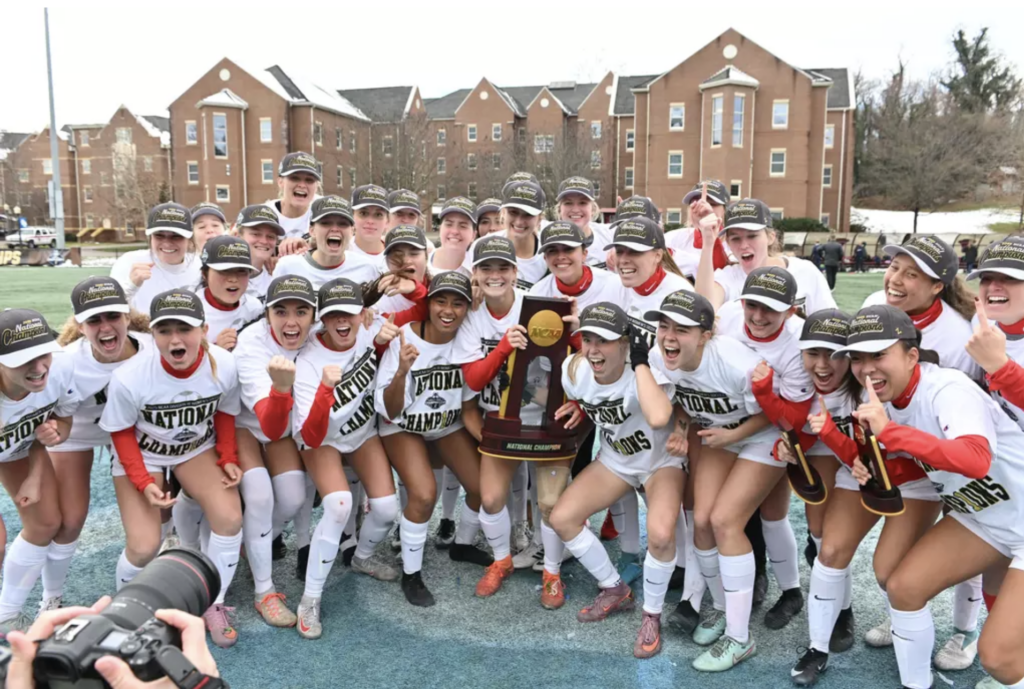
Step into the “family room” of the WashU Women’s Soccer team, and you’ll find that the trophies fade behind names on lockers, big sister lineages, and conversations that stretch well beyond soccer.
Coach Jim Conlon calls them a family, but not in a casual, cliché way. Rather, it’s reference to an intentional framework where each player develops unwavering commitment to caring for her teammates.
That’s why the NCAA Division III National Championship wasn’t the pinnacle of their 2025 season. Rather, it was the result of a culture built on love, loyalty and daily care, strengthened by the Division of Student Success’ support for scholar‑champions’ excellence, well‑being and belonging.
Building a family, not just a roster
Within this soccer program, belonging isn’t a metaphor; it’s structured. WashU recruits the human before the athlete, paying close attention to character, curiosity, and how a young person might fit into the “family room.”
Every first-year player inherits a lineage—a big sister, mom, grandma. When alumni return for games, graduates return hoping to meet their great-granddaughters among the current players on the team.
This family quietly reinforces something powerful. When adversity hits, players already know they’re held. For instance, when first-year defender Monica Morales earned playing time before two seniors, what she remembers most isn’t pressure, but generosity.
“The upperclassmen made us feel comfortable enough to be able to perform on the field and compete at a really high level. They built me up and wanted me to do well for the team.”
—Monica Morales
“The freshmen all really felt embraced by the program and welcomed,” Morales said. “The upperclassmen made us feel comfortable enough to be able to perform on the field and compete at a really high level. They built me up and wanted me to do well for the team.”
First-year forward Heidi Fesler said their culture makes space for both competition and care, honoring the legacy they’ve inherited while shaping their own.
“Monica and I have only been here one year, but you can already tell how important and special this culture is,” said Felser. “Yes, everyone competes, but it never turns toxic. We honor the legacy of the players before us while also running our own race as a team.”
The lineage, care and daily lift have become the team’s competitive edge and is the foundation that carried them deeper into a season that defied expectations.
The team’s unbeaten streak—49 straight games without a loss—is staggering. But ask the players how they maintained it, and they point to their consistent commitment to process over outcome.
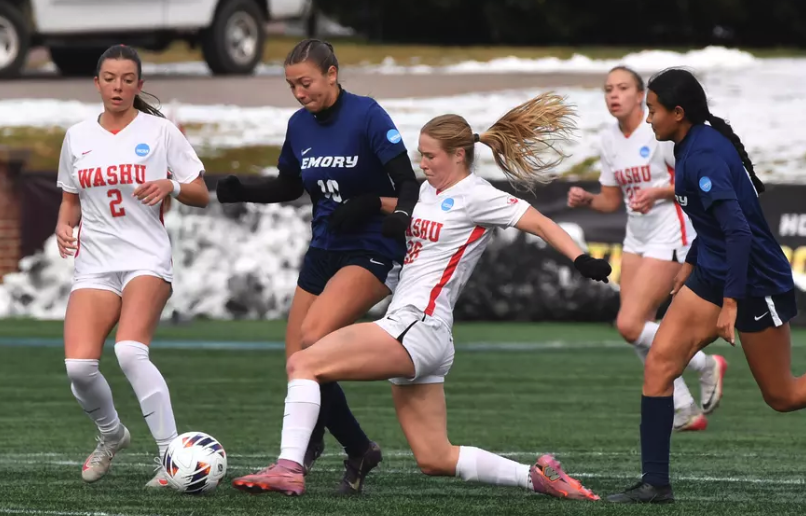
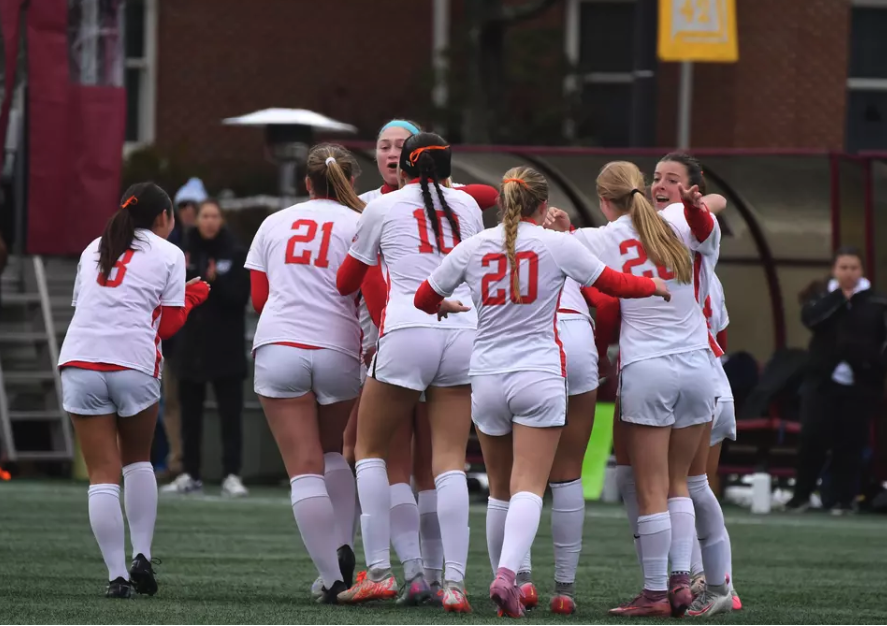
The real strength shows up in how they prepare together. Putting in the extra work isn’t viewed as individual grind but as a shared responsibility. Senior Marilee Karinshak often reminds teammates to bring someone with them on the journey, a small phrase that captures how seriously they take collective growth.
“When you bring your sister along, those extra touches, that extra prep, is never done alone,” Karinshak said. “It’s how we pull each other upward.”
That shared accountability doesn’t stop at the edge of the field. It shapes everything they do, and for a program built on raising one another’s standards, that includes how they navigate the classroom.
That flexibility is part of Student Success’ philosophy, where academic success, wellness and athletics are designed to work together in a complimentary way that develops the whole person.
The team’s balanced and collective approach is reinforced by what they call “a goldfish mentality.”
Everyone’s going to make mistakes. What really matters is how you respond and how you let it affect you. We’ve got this saying—goldfish mentality—because if something happens, we’ve already forgotten it. We’re moving on to the next thing.
—Marilee Karinshak
“Everyone’s going to make mistakes,” Karinshak said. “What really matters is how you respond and how you let it affect you. We’ve got this saying—goldfish mentality—because if something happens, we’ve already forgotten it. We’re moving on to the next thing.”
Because of that approach, the team isn’t weighed down by fear of mistakes.
“I might make a mistake, but I trust the person next to me to have my back,” Karinshak said. “That reminder helps you not be so hard on yourself. We’ll even say it to each other in practice, ‘Hey, remember, it doesn’t matter. Just keep going and do your best.’”
That ability to release mistakes doesn’t just keep them loose, it builds a steadiness they can return to when pressure spikes. For instance, when the semifinal stretched into a 14-round penalty shootout, the second-longest in NCAA history, the moment was tense, but familiar.
“It was a super stressful situation, especially facing a conference rival with their parents getting rowdy during the PKs,” said Sophie Viscovich, junior midfielder. “But we found this calm energy with each other. We trusted our preparation, and everyone who stepped up had been preparing for that exact moment.”
That composure only deepened as the shootout wore on, round after round stretching the limits of nerves and endurance. What grounded them wasn’t the scoreboard, but the certainty that no one was standing in that moment alone.
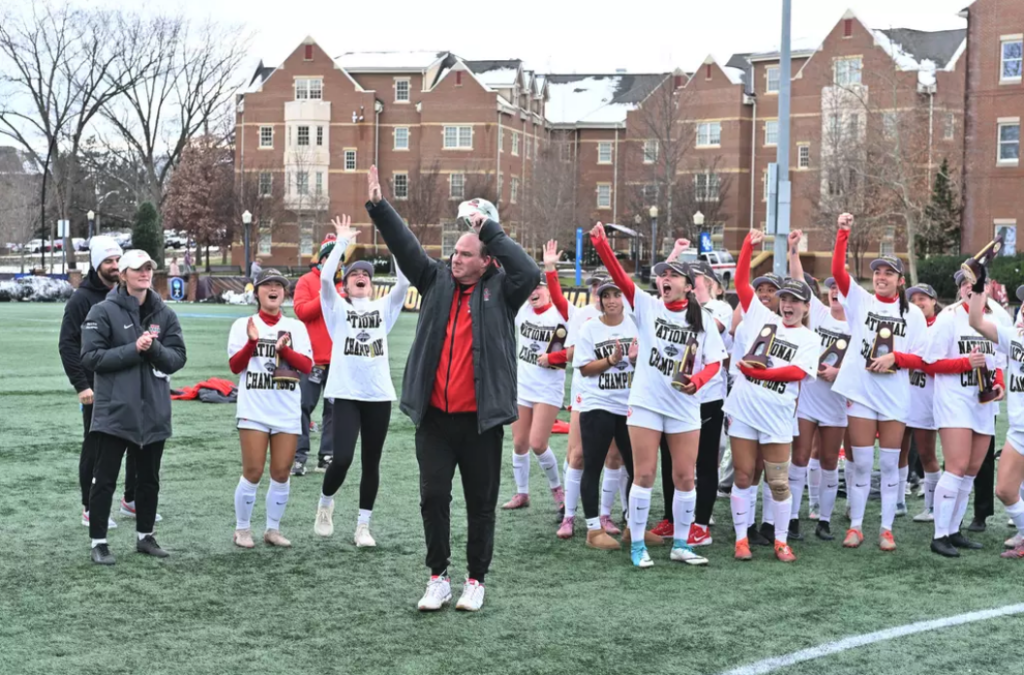
“We felt the support of all our sisters who weren’t taking kicks,” said Viscovich. “They trusted us no matter how it ended, and that support makes you less afraid to make mistakes. Whether you make the PK or miss it, it doesn’t change our family. That mindset was a game changer, especially in a shootout that went 14 rounds.”
Then, a couple days later, at the national title match, the Bears went into halftime down 1-0. But, instead of tightening up, something else happened.
“Coach pulled us in and had Maddie Foley start a dance circle,” Fesler said. “You’d think it’s crazy to be dancing while down 1–0 in a championship game, but it got everyone in the best mood, and we knew we could do it. We went into the second half with our heads up ready to go win the Natty.”
Then, they did.
Engagement & Belonging is one of the Division of Student Succcess’ anchors that delivers a transformative student experience. Student Success helps create a community where students feel at home and are empowered with the tools to grow, learn and flourish.